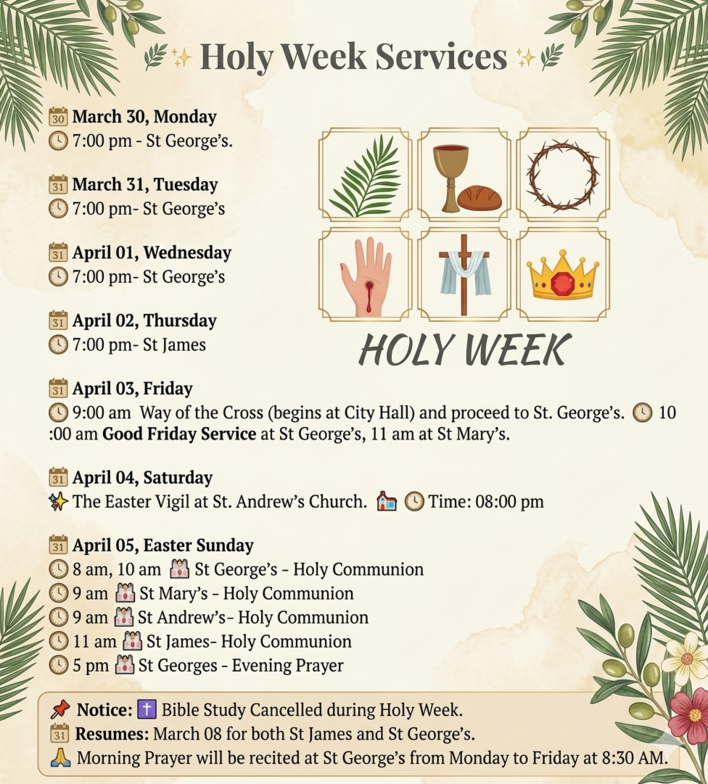
Holy Week is the final week of Lent in the Christian calendar, leading up to Easter Sunday. It commemorates the last week of Jesus Christ’s life on Earth, including His suffering, death, and resurrection. For Christians, it’s a time of reflection, prayer, and devotion, remembering Jesus’ sacrifice and celebrating the hope of new life.
Key Days of Holy Week
Palm Sunday( March 29)
Marks Jesus’ triumphant entry into Jerusalem (Matthew 21:1–11).
People waved palm branches and shouted “Hosanna!”
Symbolizes Jesus as the Messiah and the start of His journey to the cross.
Holy Monday & Holy Tuesday(March 30, 31)
These days reflect Jesus’ teachings and actions leading up to His crucifixion.
For example, He cleansed the temple and warned against hypocrisy (Mark 11:15–19).
Spy Wednesday( April 01)
Traditionally recalls Judas Iscariot’s betrayal of Jesus (Matthew 26:14–16).
A day of reflection on human weakness and the consequences of sin.
Maundy Thursday (Holy Thursday) (April 02)
Commemorates the Last Supper, when Jesus shared bread and wine with His disciples (Luke 22:14–20).
Also remembers Jesus washing the disciples’ feet, teaching humility and service.
Good Friday(April 03)
The day of Jesus’ crucifixion and death at Calvary (John 19:16–30).
It’s a solemn day of fasting, prayer, and reflection on Jesus’ sacrifice for humanity.
Holy Saturday(April 04)
A quiet day of waiting, remembering Jesus in the tomb (Matthew 27:57–66).
Often includes the Easter Vigil, when Christians anticipate His resurrection.
Easter Sunday(April 05)
Celebrates Jesus’ resurrection from the dead (Matthew 28:1–10).
A joyful day symbolizing hope, renewal, and victory over sin and death.